Antimicrobial Properties of Ethanolic and Other Components Chromatographic Analysis of Artemisia annua Leaf Extract and Its Functional Groups
Keywords:
Chromatographic Analysis, Antimicrobial Properties, Artemisia annua, Functional GroupsAbstract
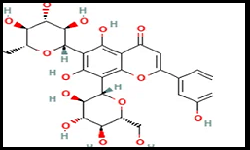
Numerous studies have demonstrated that the essential oil and extracts of Artemisia annua has antibacterial characteristics, rendering them efficient against many bacteria and fungi. Some researchers think that the plant's ability to kill both Gram-positive and Gram-negative bacteria is due to the bioactive chemicals it contains, including as artemisinin and terpenes. Using chromatographic analysis of functional groups and ethanolic Artemisia annua leaf extract, this study intends to assess the antibacterial capabilities of the plant. The results of the GC-MS analysis proved the presence of the compounds, which are 9-Octadecenoic acid, (-)-delta-cadinene, Tetraneurin E, 1-tert-Butyl-4,4-diphenylpiperidine, Lucenin-2, Germacrene D-4-ol, 4-(2,3-Diphenylcyclopropyl)phenol, Farnesene, Tetracosahexaenoic acid, beta-Caryophyllene oxide, and Isochinol. According to (methanol, Ethyl acetate, and Ethanol fraction), Ampicillin (AMP) and Cefotaxime (CTX). Recorded (28.00±0.45, 18.00±0.28, 23.00 ±0.40, 33.01±0.51 and 30.00±0.49) respectively in Staphylococcus aureus. While recorded (22.91±0.81, 14.09±0.23, 24.00±0.41, 29.00±0.48 and 26.98±0.45) for Escherichia coli. Record (24.19±0.38, 18.09±0.27, 21.26±0.29, 31.08±0.50 and 28.16±0.49) Streptococcus pyogenes. While (21.95±0.38, 25.96±0.42, 27.00±0.44, 27.95±0.48 and 23.00±0.45) for Staphylococcus epidermidis. The metabolites of Artemisia annua exhibited significant activity against Staphylococcus aureus (28.00±0.45).
Downloads
References
Batiha, G.E.; Olatunde, A.; El-Mleeh, A.; Hetta, H.F.; Al-Rejaie, S.; Alghamdi, S.; Zahoor, M.; Magdy Beshbishy, A.; Murata, T.; Zaragoza-Bastida, A.; et al. Bioactive Compounds, Pharmacological Actions, and Pharmacokinetics of Wormwood (Artemisia absinthium). Antibiotics 2020, 9, 353.
Mamatova, A, Korona-Glowniak, I. Phytochemical composition of wormwood (Artemisia gmelinii) extracts in respect of their antimicrobial activity. BMC Complement. Altern. Med. 2019, 19, 288.
AlSalhi, M.S.; Elumalai, K.; Devanesan, S.; Govindarajan, M.; Krishnappa, K.; Maggi, F. The aromatic ginger Kaempferia galanga L.(Zingiberaceae) essential oil and its main compounds are effective larvicidal agents against Aedes vittatus and Anopheles maculatus without toxicity on the non-target aquatic fauna. Ind. Crops Prod. 2020, 158, 113012.
El Moussaoui, A.; Bourhia, M.; Jawhari, F.Z.; Salamatullah, A.M.; Ullah, R.; Bari, A.; Majid Mahmood, H.; Sohaib, M.; Serhii, B.; Rozhenko, A.; et al. Chemical Profiling, Antioxidant, and Antimicrobial Activity against Drug-Resistant Microbes of Essential Oil from Withania frutescens L. Appl. Sci. 2021, 11, 5168.
Chebbac, K.; Moussaoui, A.E.; Bourhia, M.; Salamatullah, A.M.; Alzahrani, A.; Guemmouh, R. Chemical analysis and antioxidant and antimicrobial activity of essential oils from Artemisia negrei L. Against drug-resistant microbes. Evid. -Based Complement. Altern. Med. 2021, 2021, 5902851.
Chaachouay, N.; Douira, A.; Hassikou, R.; Brhadda, N.; Dahmani, J.; Belahbib, N.; Ziri, R.; Zidane, L. Mr Chaachouay Noureddine Sous le thème" Etude floristique et ethnomédicinale des plantes aromatiques et médicinales dans le Rif (Nord du Maroc). Ph.D. Thesis, Département de Biologie-Université Ibn Tofail-Kénitra, Kenitra, Morocco, 2020.
Tahri, N.; El Basti, A.; Zidane, L.; Rochdi, A.; Douira, A. Etude ethnobotanique des plantes medicinales dans la province de Settat (Maroc). Kast. Univ. J. For. Fac. 2012, 12, 192–208.
Yuan, H.; Ma, Q.; Ye, L.; Piao, G. The traditional medicine and modern medicine from natural products. Molecules 2016, 21, 559.
Gruessner, B.M.; Cornet-Vernet, L.; Desrosiers, M.R.; Lutgen, P.; Towler, M.J.; Weathers, P.J. It is not just artemisinin: Artemisia sp. for treating diseases including malaria and schistosomiasis. Phytochem. Rev. 2019, 18, 1509–1527.
Nigam, M.; Atanassova, M.; Mishra, A.P.; Pezzani, R.; Devkota, H.P.; Plygun, S.; Salehi, B.; Setzer, W.N.; Sharifi-Rad, J. Bioactive compounds and health benefits of Artemisia species. Nat. Prod. Commun. 2019, 14, 1934578X19850354.
Abad, M.J.; Bedoya, L.M.; Apaza, L.; Bermejo, P. The Artemisia L. genus: A review of bioactive essential oils. Molecules 2012, 17, 2542–2566.
Jaradat, N.; Qneibi, M.; Hawash, M.; Al-Maharik, N.; Qadi, M.; Abualhasan, M.N.; Ayesh, O.; Bsharat, J.; Khadir, M.; Morshed, R.; et al. Assessing Artemisia arborescens essential oil compositions, antimicrobial, cytotoxic, anti-inflammatory, and neuroprotective effects gathered from two geographic locations in Palestine. Ind. Crops Prod. 2022, 176, 114360.
Hinane, D.; Oubaha, S.; Satrani, B.; Ghanmi, M.; Bourkhiss, B. Domestication of the endemic plant of Morocco and high added value: Artemisia herba alba. J. Mater. Environ. Sci. 2020, 11, 283–292.
Farzaneh, F.; Ebrahim, H.S.; Akbar, V. Investigating on Effect of Wormwood Extract on Reduction of Renal Toxicity in Treated Rats by Azathioprine. Biomed. Pharmacol. J. 2015, 8, 291–299.
Kim, M.H.; Seo, J.Y.; Liu, K.H.; Kim, J.S. Protective effect of Artemisia annua L. extract against galactose-induced oxidative stress in mice. PLoS ONE 2014, 9, e101486.
Fiamegos, Y, Kastritis, P, Exarchou, V. Antimicrobial and efflux pump inhibitory activity of caffeoylquinic acids from Artemisia absinthium against gram-positive pathogenic bacteria. PLoS ONE 2011, 6, e18127.
Hori R, Sugiyama J. A combined FTIR microscopy and principal component analysis on softwood cell walls. Carbohydr Polym. 2003;52:449–453.
Semeniuc, C, Rotar, A. Antibacterial activity and interactions of plant essential oil combinations against Grampositive and Gram-negative bacteria. J. Food Drug Anal. 2017, 25, 403–408.
Qian, W.; Yang, M.; Wang, T.; Sun, Z.; Liu, M.; Zhang, J.; Zeng, Q.; Cai, C.; Li, Y. Antibacterial Mechanism of Vanillic Acid on Physiological, Morphological, and Biofilm Properties of Carbapenem-Resistant Enterobacter hormaechei. J. Food Prot. 2020, 83, 576–583.
Sethupathy, S.; Ananthi, S.; Selvaraj, A.; Shanmuganathan, B.; Vigneshwari, L.; Balamurugan, K.; Mahalingam, S.; Pandian, S.K. Vanillic acid from Actinidia deliciosa impedes virulence in Serratia marcescens by affecting S-layer, flagellin and fatty acid biosynthesis proteins. Sci. Rep. 2017, 7, 16328.
Yemis, G.P.; Pagotto, F.; Bach, S.; Delaquis, P. Effect of vanillin, ethyl vanillin, and vanillic acid on the growth and heat resistance of Cronobacter species. J. Food Prot. 2011, 74, 2062–2069.
Mamatova, A.S.; Korona-Glowniak, I.; Skalicka-Wozniak, K.; Jozefczyk, A.; Wojtanowski, K.K.; Baj, T.; Sakipova, Z.B.; Malm, A. Phytochemical composition of wormwood (Artemisia gmelinii) extracts in respect of their antimicrobial activity. BMC Complement. Altern. Med. 2019, 19, 288.
Masoud, S. M., Abd El-Baky, R. M., Aly, S. A., & Ibrahem, R. A. (2021). Co-existence of certain ESBLs, MBLs and plasmid mediated quinolone resistance genes among MDR E. coli isolated from different clinical specimens in Egypt. Antibiotics, 10(7), 835.
Mathlouthi, A., Saadaoui, N., & Ben-Attia, M. (2021). Essential oils from Artemisia species inhibit biofilm formation and the virulence of Escherichia coli EPEC 2348/69. Biofouling, 37(2), 174-183.
Navarro-Pérez, M. L., Vadillo-Rodríguez, V., Fernández-Babiano, I., Pérez-Giraldo, C., & Fernández-Calderón, M. C. (2021). Antimicrobial activity of a novel Spanish propolis against planktonic and sessile oral Streptococcus spp. Scientific Reports, 11(1), 23860.
Poiata, A., Tuchilus, C., Ivanescu, B., Ionescu, A., & Lazar, M. I. (2009). Antibacterial activity of some Artemisia species extracts. Revista MedicoChirurgicală a Societății de Medici și Naturaliști din Iași, 113, 911-914.
Salmerón-Manzano, E., Garrido-Cardenas, J. A., & Manzano-Agugliaro, F. (2020). Worldwide research trends on medicinal plants. International Journal of Environmental Research and Public Health, 17(10), 3376.
Sengul, M., Ercisli, S., Erzurum, T., Yildiz, H., Gungor, N., Kavaz, A., & Çetin, B. (2011). Antioxidant, antimicrobial activity, and total phenolic content within the aerial parts of Artemisia absinthum, Artemisia santonicum, and Saponaria officinalis. Iranian Journal of Pharmaceutical Research, 10, 49-56.
Shaaban, M. T., Abdel-Hamid, M. S., Orabi, S. H., Korany, R. M., & Elbawab, R. H. (2024). Assessment of the antibacterial efficacy of silver nanoparticles-based Artemisia annua against methicillin-resistant Staphylococcus aureusinfected lung tissues in albino rats. Journal of Analytical Science and Technology, 15(1), 25.
Shaaban, M. T., El Silk, S. E., & Tayel, M. A. (2011). Efficiency of some plant extracts, carbohydrates and inorganic salts as anti-adhesion agents against the adhesion of Staphylococcus strains to HEp-2 cells. Life Sci J, 8, 1172-1182.
Shaaban, M. T., Ibrahim, H. A. H., & Hanafi, A. A. M. (2020). Antibiotic-resistant bacteria isolated from selected urine and stool human specimens. Biosci Res, 17(1), 351-365.
Downloads
Published
How to Cite
Issue
Section
License

This work is licensed under a Creative Commons Attribution 4.0 International License.
Current Clinical and Medical Education